
Low Camp to High Camp
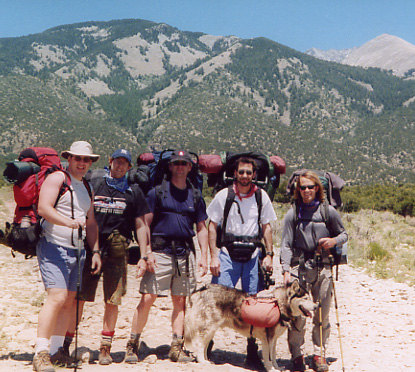
So, packed and ready to go. Our initial goal was just to get up into the Aspens (obscured by the tops of our packs). Bear in mind: this is still day one in CO, and our bodies are still suffering from sleep deprivation and still acclimating to the atmosphere, which has about 30% less oxygen at this altitude. So the goal of the first night is just to have a "low" camp, where we can rest and acclimate.
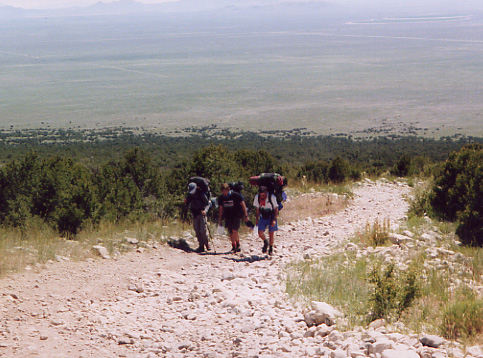
Adam took some outstanding pictures of us hiking this year. This is one of the best. We're almost to "low" camp. As you can see, we actually made some headway on the altitude. To give you a sense of scale, look at the upper right hand corner: those are the tops of mountains in the San Juan range, across the valley, which is about 50 miles across.
This is Kenn, Ned, and me. It's hard to appreciate at 72 dots per inch, but we're all just staring down at the trail, which is the usual disposition of a hiker, the whole goal being to just put one foot in front of the other. Kenn was unfortunately quite prescient when he said that the trail surface we were on right there would make everything else look like "freshly paved interstate."
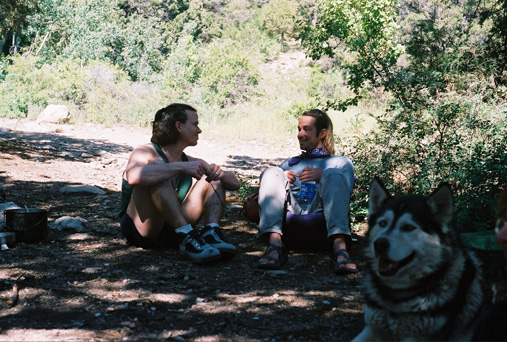
This is low camp, which was a well-established spot that already had a pretty big fire ring and lots of cleared space. We were about a mile up the path, but already one of my slight fears was realized about climbing a mountain not ensconced in wilderness: if you looked hard through the trees, you could see civilization's lights. But we didn't have that at high camp.
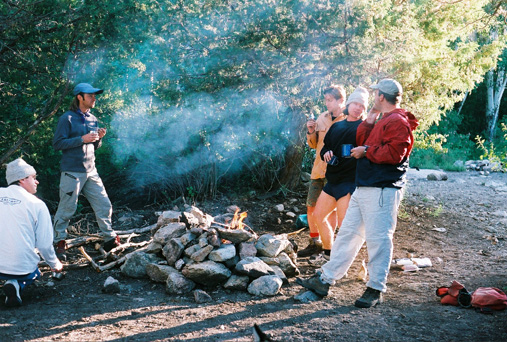
The low camp fire ring; breakfast. Kenn taught us that you don't need a damn stove to cook in the mountains: you just put your pot in the fire. The night before this shot, he had prepared easily the most elaborate and delicious meal I've had on a mountain: thai chicken and rice.
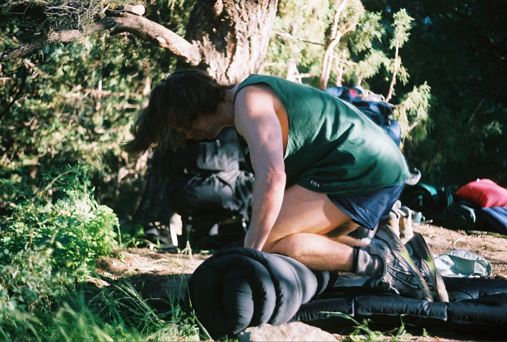
Adam packing for the trip to high camp. He owns the single largest sleeping bag I've ever seen in my life. He claims to love it. Here he is going through the ritual of trying to get it to fit on his pack.
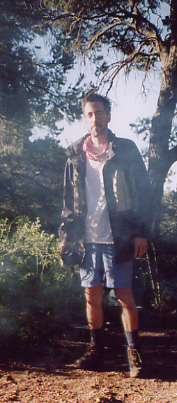
Me, amidst the breakfast morning smoke.
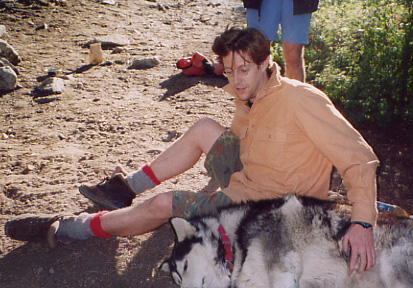
Ned just before leaving low camp. Ringo liked to lead us on the trail (until it disappeared into man-sized boulders), but at camp he pretty much just laid about and let us pet him. He was usually too tired to even kick his leg when we scratched his belly.
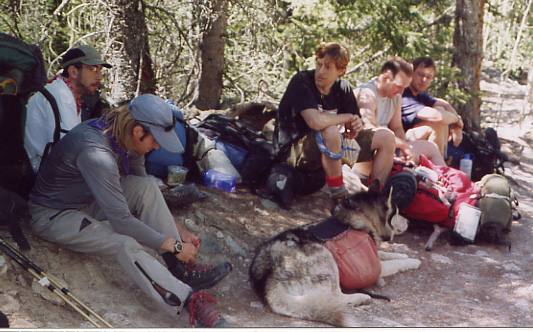
And they're off! This was our first rest stop on the way high camp. We'd climbed for maybe 60, 90 minutes. This was the only half mile of the trail that was wooded. I learned a lot about terrain on this trip. When you have trees, that generally means you're climbing on dirt, which is practically luxurious.
This trail was especially damaged by four-wheelers, which could-- and did-- make it all the up past tree line (12,000 feet). But how anyone could enjoy traveling at 5 mph over nauseously bumpy terrain is beyond me.
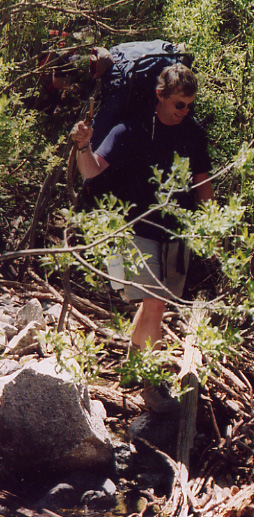
After that, here's Marc at the only river crossing we had. It was thoroughly wooded over with fallen sticks, so you didn't really risk getting wet.
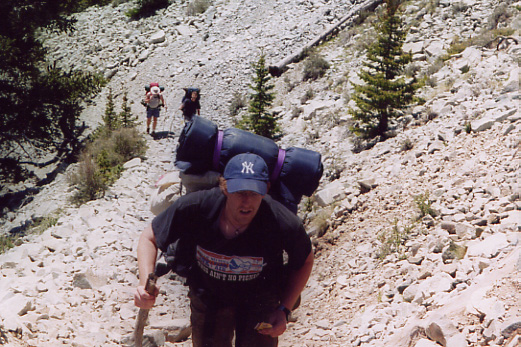
And here, folks, is the single best picture I've ever seen of the experience of backpack hiking (taken by Adam). With a scanned version of this photo, it's hard to appreciate the agony on Ned's face, but believe me, it's palpable in the original. And Ned was easily one of the strongest climbers this year.
This terrain was particularly rough. As you can see, it's all granite. That's it. And it's completely exposed. This was also as far south as I've ever climbed, and, although it wasn't like, oh, say, Dallas, it was plenty hot. With the sun and the constant boulders it was no fun.
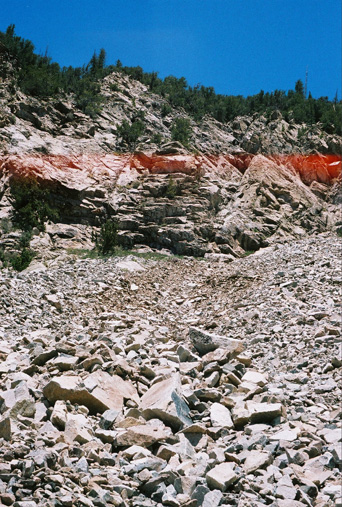
Hiking over boulders is difficult because it brings your consciousness back into your body. You're already not enjoying the altitude and the weight of the pack and the cardiovascular stress; the idea is to be able to just get into a rhythm and lose focus on the pain. With boulders, you're having to constantly pay attention to where you step, and it brings your focus back into what your body is feeling.